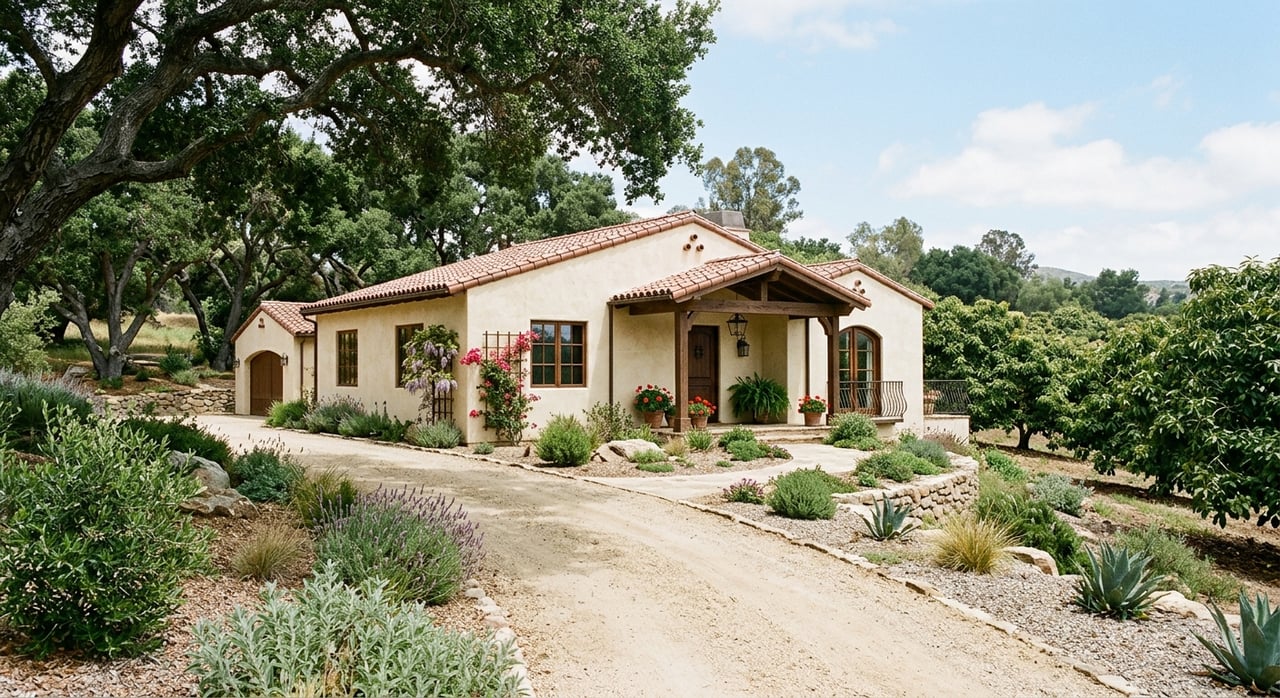
Looking for more space, quieter surroundings, and a stronger sense of place in North County? Fallbrook often catches buyers’ attention for exactly those reasons. If you are wondering whether its rural setting, small-town feel, and longer drive times fit your lifestyle, this guide will help you weigh the pros and tradeoffs with more confidence. Let’s dive in.
What Fallbrook feels like
Fallbrook is an unincorporated community in North County San Diego with a distinct rural identity. County planning materials describe rolling hills, avocado and citrus groves, vineyards, and equestrian properties across the broader area. That setting gives Fallbrook a very different feel from denser North County cities.
It also works as more than a bedroom community. San Diego County notes that Fallbrook provides goods and services for nearby communities, which helps explain why it feels like a rural hub with its own town center. If you want a place with local services and a strong community identity, that matters.
There is one detail that can be confusing when you research Fallbrook. The Census-designated place is 17.54 square miles with 32,267 residents as of the 2020 Census, while the broader planning area is much larger. In practical terms, that means people often use “Fallbrook” to describe a wider area than what you may see in some data sources.
Why buyers choose Fallbrook
For many buyers, the biggest draw is space. Fallbrook offers a setting shaped by agriculture, open views, and lower-density development rather than tightly packed neighborhoods. If you want room to spread out or simply prefer a calmer pace, that can be a major plus.
The community also has a long-standing local character that feels rooted rather than manufactured. County materials note that Fallbrook became known for avocados, and that agricultural history still shapes the area’s identity today. You see that influence in the landscape, local events, and overall atmosphere.
Homeownership is also a meaningful part of the local picture. Census data shows that 58.5% of housing units are owner-occupied. That does not tell you whether Fallbrook is right for you on its own, but it does suggest a community with many long-term residents and established households.
Daily life in Fallbrook
Fallbrook’s lifestyle is less about big regional entertainment and more about local routines, community spaces, and outdoor scenery. The Fallbrook Chamber of Commerce highlights arts, antiques, entertainment, retail, golf, wineries, and nature trails as part of the local experience. That mix supports a slower, more self-contained rhythm of daily life.
Community spaces play a big role here. The Fallbrook Community Center offers recreational and social programming, meeting rooms, courts, picnic areas, and a playground. The Fallbrook Library adds children’s and teen areas, a computer center, meeting rooms, and a used bookstore space known as the Bottom Shelf bookstore.
Those kinds of places matter when you are trying to picture your weekly routine. In Fallbrook, everyday life tends to revolve around civic spaces, local businesses, and recurring community activities. If you enjoy a town where people gather around familiar places, that is part of the appeal.
Arts and events shape local culture
Fallbrook has a more active arts and events scene than some buyers expect from a rural community. The Fallbrook Art Center hosts exhibitions in three galleries, and the Fallbrook School of the Arts offers year-round classes and programs. That gives residents access to creative outlets without leaving town.
Annual events also help define the local culture. The Avocado Festival is one of the best-known examples, with artisan vendors, family activities, and a strong agricultural theme. According to the Chamber, it has averaged about 100,000 day-of-event attendees over many years.
The library adds even more to the social calendar through a monthly music series, author appearances, book talks, and an annual Community Read. So while Fallbrook may not offer the pace of a larger city, it is not sleepy in the sense of having nothing to do. Its activity is simply organized around local traditions and community-based programming.
What to know about schools
If schools are part of your home search, Fallbrook has its own local public-school structure. Fallbrook Union Elementary serves preschool through 8th grade and has 11 active schools listed by the state. Fallbrook Union High serves grades 9 through 12 and has three active schools.
That local setup can be appealing if you prefer a community with its own district-centered system rather than a much larger menu spread across multiple nearby cities. The elementary and middle school options listed by the California Department of Education include Fallbrook STEM Academy, Fallbrook Virtual Academy, James E. Potter Intermediate, La Paloma Elementary, Live Oak Elementary, Maie Ellis Elementary, Mike Choate Early Childhood Education Center, Santa Margarita Academy, and William H. Frazier Elementary.
At the high school level, the state lists Fallbrook High, Ivy High, and Oasis High. For buyers, the main takeaway is not that the system is huge, but that it is established and locally rooted. If you are comparing North County communities, that gives Fallbrook a different profile than larger suburban areas.
Cost and housing context
Fallbrook offers a rural lifestyle, but it is not a low-cost shortcut into North County. Census data reports a median household income of $96,394, a median owner-occupied home value of $784,100, and a median gross rent of $1,786. Those numbers point to a market where lifestyle value is a major part of what you are paying for.
That matters if you are choosing between Fallbrook and a more suburban alternative. You may get a different kind of environment here, but you still need to enter the market with realistic expectations. The appeal is often about land, privacy, views, and a strong local identity, not bargain pricing.
The commute tradeoff
The biggest question for many buyers is simple: are the space and scenery worth more time in the car? Census data shows a mean travel time to work of 32.8 minutes for Fallbrook residents. That average helps explain why commute planning is such a big part of the decision.
County planning documents add more context. They note that the community is shaped in part by steep slopes and Interstate 15 on the eastern side, while the town center sits near the western boundary. In daily life, that geography can make errands and commuting feel more car-dependent than they would in a denser neighborhood.
This is probably the clearest tradeoff in Fallbrook. You may gain quieter surroundings, a more rural setting, and larger-lot possibilities, but you will likely give up some convenience and walkability. For many buyers, that exchange is well worth it. For others, it can become a daily frustration.
Who Fallbrook fits best
Fallbrook tends to work well for buyers who value setting as much as structure. If you care about open space, hills, groves, vineyards, and a small-town atmosphere, you may feel at home here quickly. The area can also appeal if you want a community with its own services, events, and civic life instead of a place that feels purely residential.
It may be less ideal if you want short commutes, easy walkability, or the convenience of a denser urban or suburban grid. Fallbrook asks you to be honest about your priorities. If your ideal day includes quiet mornings, scenic drives, and a stronger sense of separation from city pace, it could be a very strong fit.
How to decide with confidence
The best way to evaluate Fallbrook is to look beyond listing photos and focus on your routine. Think about how often you commute, how much driving you are comfortable with, and whether local community life matters to you. Also consider whether you are drawn to a more rural, agriculture-shaped setting or would be happier in a more connected suburban environment.
This is where local guidance can make a real difference. A neighborhood that looks perfect online can feel very different once you understand drive times, the location of the town center, and how the broader Fallbrook area functions. When you know what daily life really looks like, it is much easier to choose well.
If you are exploring Fallbrook or comparing it with other North County communities, working with a team that knows the area can help you narrow in on the right fit faster. Jamie Gilman can help you weigh lifestyle, location, and property options so you can move forward with clarity.
FAQs
Is Fallbrook considered rural in North County San Diego?
- Yes. County planning materials describe Fallbrook with rolling hills, agricultural land, vineyards, and equestrian properties, and that rural character is a core part of its identity.
What is daily life like in Fallbrook for homebuyers?
- Daily life in Fallbrook centers on local amenities, community spaces, arts, wineries, nature trails, and civic events rather than dense urban entertainment.
Are there public schools in Fallbrook, California?
- Yes. Fallbrook has local public school districts, including Fallbrook Union Elementary for preschool through 8th grade and Fallbrook Union High for grades 9 through 12.
How long is the average commute from Fallbrook?
- Census data reports a mean travel time to work of 32.8 minutes, so commute time is an important factor to consider when deciding if Fallbrook fits your lifestyle.
Is Fallbrook more affordable than other North County areas?
- Fallbrook offers a distinct lifestyle, but Census figures show it is not inexpensive, with a median owner-occupied home value of $784,100 and median gross rent of $1,786.
What makes Fallbrook different from other North County communities?
- Fallbrook stands out for its rural scenery, agriculture-based identity, active local arts and events scene, and its role as a small-town service hub for nearby communities.