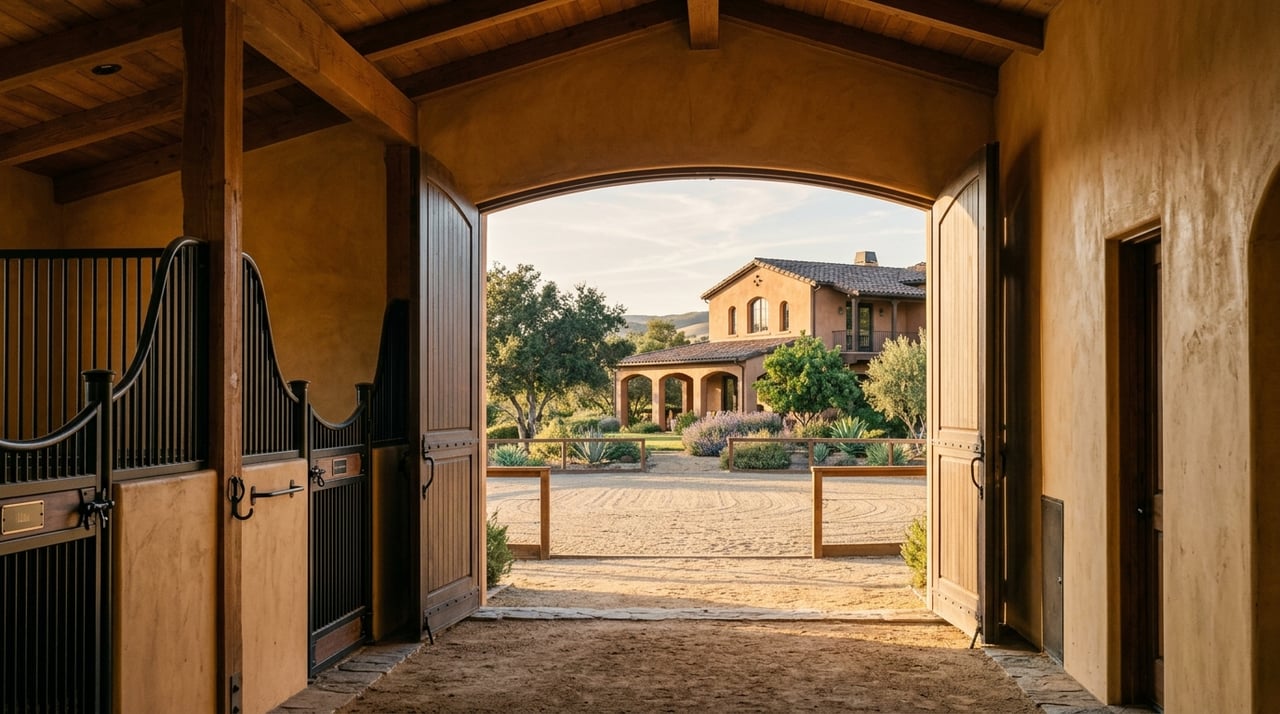
Dreaming of a home where your horse is part of your daily routine, not a long drive away? Bonsall stands out in North County San Diego because it offers the space, rural setting, and long-established equestrian character many buyers hope to find, but it also comes with real planning and upkeep. If you are considering horse property in Bonsall, this guide will help you understand what the lifestyle looks like, what to verify before you buy, and how to tell if the fit is right for you. Let’s dive in.
Why Bonsall Appeals to Horse Owners
Bonsall is an unincorporated community in North County San Diego, bordered by Fallbrook to the north and Oceanside to the west. San Diego County describes it as a hill-and-valley area where low-density estate lots, agricultural land uses, and equestrian facilities are common. That matters if you want room to spread out rather than a more suburban setting.
The community plan also emphasizes preserving Bonsall’s rural character, open space, and existing pattern of residential, agricultural, and equestrian uses. In simple terms, the area is designed to stay more land-focused and less dense. For many buyers, that is exactly what makes Bonsall feel different.
If your goal is a small ranch, a horse property, or a home with more privacy and breathing room, Bonsall naturally lines up with that vision. The setting supports a quieter lifestyle while still keeping you connected to North County. You get a rural atmosphere without feeling completely cut off.
What Makes a Property Horse-Friendly
Not every large lot is automatically ready for horses. In unincorporated San Diego County, horse uses are governed by county zoning, and what is allowed depends on the parcel’s specific rules and animal designator. That is why it is important to verify the property itself instead of assuming any home in Bonsall will work.
San Diego County distinguishes between private horsekeeping and a horse stable use. Private horsekeeping generally refers to horses kept by the owners or occupants of the property. A horse stable covers more commercial activities such as boarding, breeding, training, riding, and similar uses.
That distinction can make a big difference in how you evaluate a property. If you simply want to keep your own horses at home, your checklist may be different from someone considering boarding or training operations. Early due diligence can save you time, money, and frustration later.
Key Property Features to Check
A horse-friendly setup usually needs more than open land. Practical horse ownership guidance points to several basics that should be part of your review:
- A stall, pen, or appropriate containment area
- Shelter or shade
- Clean water access
- Space for manure storage or composting
- Hay and forage storage
- Horse-safe fencing
- Enough room for turnout
If you want to ride directly from home, trail access should be part of your search. If your focus is training or regular schooling, a riding ring or arena may be more important. The right property depends on how you plan to live with your horses day to day.
Zoning and Parcel Questions to Ask
Before you fall in love with a view or a barn, it helps to ask a few direct questions. These are some of the most important items to verify during your search in Bonsall:
- Does the parcel’s animal designator allow the type of horse use you want?
- Would private horsekeeping be allowed as-is?
- If commercial horse activity is planned, would additional approvals be required?
- Is there enough usable area for turnout, fencing, hay storage, and manure handling?
- Does the property layout support vehicle and trailer access?
These questions matter because Bonsall’s appeal is tied to larger lots and rural land uses, but each parcel still has its own legal and practical limits. A property can look ideal at first glance and still require more verification than expected. Working through those details early helps you shop with confidence.
Fire Safety and Rural Infrastructure
Owning horse property in Bonsall also means thinking beyond the house itself. San Diego County requires defensible space around structures in unincorporated areas, and Bonsall’s community planning documents note physical constraints such as slopes, roads, water, and limited infrastructure. Those realities shape how a property functions over time.
For horse owners, wildfire planning is part of everyday ownership. You may need to think about barn placement, fire-safe landscaping, access routes for trucks and trailers, and whether the land can be maintained without becoming a fuel-management burden. A beautiful rural setting often comes with more hands-on responsibility.
Topography can also affect usability. A parcel may have generous acreage on paper, but slopes and layout may limit how much of that land works well for horses. It is smart to evaluate not just lot size, but usable space.
What the Climate Means for Horse Living
Bonsall’s inland North County setting supports outdoor living for much of the year. NOAA climate normals for nearby Fallbrook 5 NE show an annual mean temperature of 65.1°F, annual precipitation of 15.31 inches, and essentially no snow. That kind of climate can be appealing if you want a property where daily horse care and riding are possible year-round.
Summer heat still deserves attention. July and August mean highs are 87.2°F and 89.3°F, which means shade, water access, and heat planning are important parts of horse care. San Diego County also notes that Bonsall has local microclimates with greater humidity and more uniform temperatures than areas farther inland.
For you as a buyer, this means the climate is generally favorable, but setup still matters. A well-planned property should support water access, shelter, and practical summer management. Those details can make daily life more comfortable for both you and your horses.
Trails and Equestrian Culture in Bonsall
One of Bonsall’s biggest advantages is that the equestrian lifestyle here is not new or incidental. The county’s Bonsall trails plan documents a long-running horse culture in the area. It notes that the San Luis Rey River South Trail has been used by riding clubs since 1940 as a main equestrian trail along the south side of the river.
The same plan describes trail connections to Oceanside and to communities east of Bonsall, along with other routes intended for equestrian and non-motorized use. That kind of trail network adds real lifestyle value if riding access matters to you. It can shape how often you ride, how much trailering you need, and how connected you feel to the local horse community.
For many buyers, this is part of what makes Bonsall special. You are not just buying land for horses. You are buying into an area with an established pattern of equestrian use and community support for trails.
Daily Costs and Responsibilities
Horse ownership is usually a lifestyle decision with ongoing expenses, not just a one-time purchase. Utah State University Extension says owners should expect at least $1,000 to $2,000 per horse per year on feed, health care, equipment, farrier work, and veterinary services, in addition to boarding and miscellaneous costs. That baseline helps frame the long-term commitment.
UC ANR budgeting examples offer another useful reality check. Their sample figures include monthly board of $300 to $650, farrier work of $50 to $150 every 6 to 8 weeks, hay at $100 to $140 per month for a light horse, spring and fall shots of $100 to $150, and dental care of $125 to $300. These are example figures rather than Bonsall-specific quotes, and Southern California costs can run higher.
Daily care also adds up in time. UC ANR notes that horses can live 25 to 30 years and often eat 1.5% to 2.5% of their body weight in dry forage each day. For a 1,000-pound horse, that works out to about 15 to 25 pounds of hay daily.
On top of feeding, horses need regular hoof care, annual veterinary care, yearly dental checks, waste management, exercise, and turnout. If a horse is stalled, it should still receive at least an hour of turnout each day. That is why the lifestyle works best when your schedule, budget, and property setup all support the routine.
Boarding vs. Keeping Horses at Home
If you are new to horse ownership, keeping a horse at home is not your only path. Boarding at a nearby stable can be a practical transition because it often includes professional care, lessons, riding facilities, or trail access. It can also reduce the daily logistics of feed, farrier scheduling, and veterinary coordination.
Keeping horses at home offers more control and can reduce long-term boarding costs in the right setup. At the same time, it shifts more responsibility to you. In Bonsall, that may also include land maintenance, fire planning, manure handling, and ongoing property management.
For some buyers, the ideal solution is a property with equestrian potential while continuing to board at first. That approach can give you flexibility as you learn the rhythm of ownership. It also keeps you from overcommitting before you know how you want to use the property.
The Lifestyle Tradeoffs to Consider
Bonsall can deliver the kind of rural lifestyle that feels hard to find elsewhere in coastal Southern California. You may gain privacy, open space, room for animals, and access to a community with deep equestrian roots. That combination is a big part of the area’s draw.
At the same time, rural living usually asks more of you. You may have more upkeep, more self-management, and more property-specific planning than you would in a typical suburban neighborhood. The same space and freedom that feel so attractive also come with added responsibility.
That does not make the lifestyle harder than it is worth. It simply means the best purchase is usually the one that matches both your vision and your willingness to manage the details. A great horse property is not just beautiful. It is functional for the way you actually plan to live.
Nearby Conveniences Still Matter
Even if you are choosing Bonsall for its rural feel, nearby amenities still shape your day-to-day experience. Oceanside to the west offers beach and harbor amenities, including coastal recreation, picnic areas, restrooms, shops, and dining. That gives you an easy change of pace when you want time by the water.
Fallbrook to the north provides a town-center setting and a historic district revitalization effort that supports errands, local shopping, and everyday services. For many buyers, this balance is part of Bonsall’s appeal. You can enjoy a more private, land-oriented lifestyle while staying close to practical North County destinations.
How to Shop for Horse Property Wisely
When you search in Bonsall, it helps to think beyond square footage and finishes. Rural and equestrian properties often need a more layered review. You are not just buying a house. You are evaluating land use, infrastructure, access, and long-term livability.
A smart starting checklist includes:
- Verifying the parcel’s zoning and animal designator
- Reviewing usable land, not just total acreage
- Checking shade, water access, fencing, and shelter options
- Thinking through trailer access and circulation
- Evaluating defensible space and wildfire planning needs
- Comparing at-home horsekeeping with boarding options
- Building a realistic care and maintenance budget
This kind of planning can help you avoid buying a property that looks right but functions poorly for your goals. In a market like Bonsall, local experience matters because the details are often what separate a dream setup from an expensive learning curve.
If you are exploring Bonsall because you want space, rural character, or a property that can support a horse-centered lifestyle, it pays to have a guide who understands North County’s land, neighborhoods, and property types. With decades of experience in the area, Jamie Gilman can help you evaluate not just what looks appealing online, but what makes sense for the way you want to live.
FAQs
What makes Bonsall attractive for horse property buyers?
- Bonsall offers a rural hill-and-valley setting with low-density estate lots, agricultural land uses, equestrian facilities, open space, and a long-established horse culture.
What should you verify before buying a horse property in Bonsall?
- You should confirm the parcel’s zoning and animal designator, allowed horse uses, usable turnout space, fencing potential, hay and manure storage areas, and vehicle or trailer access.
What is the difference between private horsekeeping and a horse stable in Bonsall?
- In San Diego County, private horsekeeping refers to horses kept by the property’s owners or occupants, while a horse stable includes commercial activities such as boarding, breeding, training, riding, corrals, paddocks, pens, and arenas.
How does wildfire planning affect horse property ownership in Bonsall?
- Horse property owners in Bonsall need to consider county defensible space requirements, barn placement, fire-safe landscaping, access routes, and how to manage land without creating excess fuel load.
What is the climate like for horses in Bonsall?
- Bonsall has a warm, dry Mediterranean-style climate with an annual mean temperature of 65.1°F, limited rainfall, little to no snow, and summer heat that makes shade and water planning important.
Are there equestrian trails in Bonsall?
- Yes, the county’s trails plan documents a long-running equestrian network, including the San Luis Rey River South Trail and connections to Oceanside and communities east of Bonsall.
What are the ongoing costs of horse ownership to plan for in Bonsall?
- You should budget for feed, farrier care, veterinary services, dental care, equipment, shelter, fencing, bedding, and possibly boarding, training, hauling, or insurance.
Is boarding a good option if you are new to horse ownership in Bonsall?
- Yes, boarding can be a practical way to start because it often provides professional care, lessons, and riding access while reducing the day-to-day logistics of keeping horses at home.