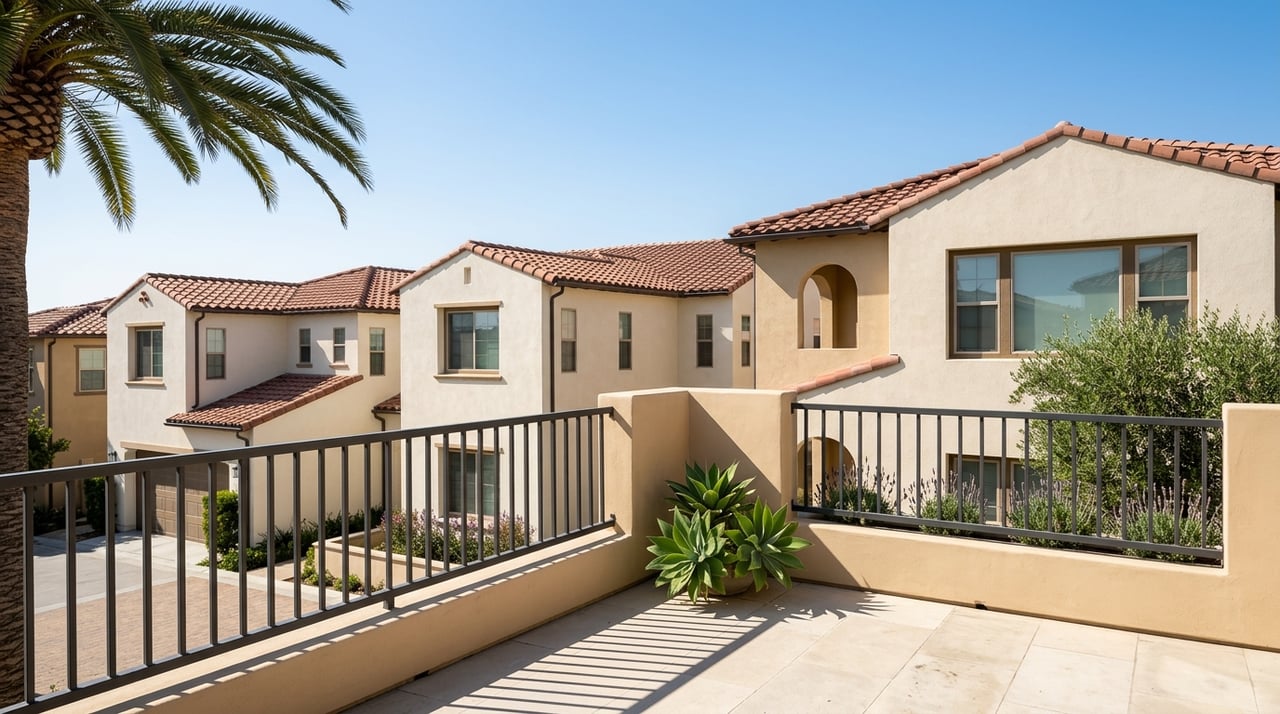
Trying to choose between a more central part of Escondido and a quieter edge-of-town setting? You are not alone. For many buyers, the real question is not simply urban versus rural. It is whether you want shorter errands, more transit access, and a wider range of home types, or more land, more privacy, and a slower-feeling pace. If you are weighing both lifestyles, this guide will help you compare the tradeoffs in Escondido and decide what fits your day-to-day life best. Let’s dive in.
Escondido Is More of a Spectrum
Escondido does not split neatly into two worlds. The city’s General Plan describes an urbanized core and surrounding perimeter areas, which creates a range of living styles instead of a strict either-or choice.
In the core, planning is focused on smart-growth housing near Grape Day Park, pedestrian-friendly corridors, transit, and access to everyday services. Along major corridors like Escondido Boulevard, Centre City Parkway, and East Valley Parkway, the city identifies convenient access to shopping, recreation, education, and jobs.
On the outer edges, the pattern shifts. Rural and Estate designations are used in lower-density areas to protect ridgelines, steep slopes, and open space around places like Daley Ranch and Lake Wohlford. That means the lifestyle difference often comes down to convenience-oriented density versus space-oriented low density.
Urban Living in Central Escondido
If you want a home base that keeps daily life simple, the more central parts of Escondido may feel like the better fit. These areas tend to offer shorter errand runs, easier access to major roads, and more attached-home choices.
The city’s planning documents tie the urbanized core to walkable connections, transit, and nearby services. That does not mean every block functions the same way, but it does mean central Escondido is where the city has concentrated many of the features that support a more connected routine.
What the Housing Mix Looks Like
Urban designations in Escondido support a broad range of housing types. You will see condos, townhomes, flats, apartments, and detached homes in the more compact parts of the city.
That variety matters if you are trying to balance budget, maintenance, and location. In practical terms, central neighborhoods often give you more options if you want an attached home or a smaller detached property.
What Pricing Can Look Like
Recent market snapshots show how this part of the market can differ from the citywide median. In May 2026, median listing prices were reported at $549,950 in Central Escondido, $749,500 in Midway, and $865,000 in North Broadway, while the broader city median listing price was $928,000.
Current inventory also includes attached homes ranging from roughly the mid-$400,000s to the mid-$700,000s. One current example cited in the market data was a 1,080-square-foot single-story townhome in 92026 listed at $669,000.
Rural and Estate Living on the Edges
If your priority is space, privacy, or a more tucked-away setting, Escondido’s outer areas may be more appealing. Hillside, semi-rural, and estate-style neighborhoods often feel very different from the central grid.
These areas are shaped by topography and larger parcels. In some locations, the General Plan allows densities as low as 1 dwelling per 4, 8, or 20 acres, which helps explain why the edge of Escondido can feel more open and land-oriented.
What “More Land” Really Means
One of the most common buyer questions is how much more land you actually get by moving toward the hills. In Escondido, the answer depends heavily on the specific area and the type of property.
Current examples show the range. A Hidden Meadows home is listed on 0.75 acre, another sits on 1.67 acres, and a Jesmond Dene land parcel is 1.75 acres. That is very different from the lot pattern you would typically expect in more compact neighborhoods.
Why Prices Can Climb Fast
In the semi-rural and estate market, lot size and setting can matter just as much as square footage. Privacy, views, acreage, and a more secluded feel can push prices above the citywide median.
Recent market snapshots reflect that. Hidden Meadows pricing has ranged from about $902,499 to $1,249,000, Lake Hodges has been around $1.65 million to $1.70 million, Jesmond Dene around $894,500, and the 92029 zip code snapshot showed a $1.399 million median listing price.
Daily Convenience vs Daily Space
For many buyers, this is the real decision point. Do you want a home that makes errands and commuting easier, or do you want a home that gives you more breathing room and a quieter setting?
Central and more suburban parts of Escondido tend to have the edge for convenience. You are generally closer to shopping, services, transit connections, and a wider mix of housing types.
Hillside and semi-rural areas often offer the opposite strengths. You may gain privacy, views, and larger parcels, but you usually trade away some ease of access.
When Urban-Style Escondido Makes Sense
A more central location may be the better match if you want:
- Shorter trips for everyday errands
- More attached-home options
- Better access to transit connections
- A location tied more closely to shopping and services
- A simpler day-to-day routine
When Rural-Style Escondido Makes Sense
A lower-density edge area may be the better match if you want:
- Larger lots or acreage
- More privacy between properties
- Hillside or open-space surroundings
- A quieter feel
- A property where land and setting are major priorities
Commuting Feels Different in Each Setting
Commute patterns can be one of the biggest practical differences between the two lifestyles. Escondido sits about 30 miles north of downtown San Diego, with I-15 running through the city and SR-78 serving as the main east-west corridor.
For central neighborhoods, transit can be a more realistic part of your routine. SANDAG reports that Rapid 235 runs between the Escondido Transit Center and Downtown San Diego every 15 minutes during peak commuting hours, and Rapid 280 also serves that corridor. The SPRINTER rail line connects Oceanside to Escondido across 22 miles.
The Inland Rail Trail adds another mobility option by providing a separated walking, biking, and rolling route between the Escondido Transit Center and Vista. In the core, these connections can make it easier to build a routine that is not fully car-dependent.
What to Expect in Edge Areas
On the semi-rural side of Escondido, commuting is usually more tied to driving. Depending on the location, daily travel may rely more heavily on I-15, SR-78, Valley Parkway, Bear Valley Parkway, and local access roads.
Some edge areas still offer workable access to major corridors. But in general, the farther you move into hillside settings, the less transit-oriented your routine is likely to feel.
Access and Wildfire Planning Matter
If you are drawn to hillside or semi-rural living, access is worth thinking through carefully. This is not just a lifestyle detail. It can affect your drive time, your sense of convenience, and how you plan for emergencies.
The city’s Community Wildfire Preparedness Plan notes that several northern and eastern hillside communities are served by limited or single access routes. It also identifies roads such as Lake Wohlford Road, El Norte Parkway, and Country Club Lane as potentially narrow, winding, and shoulder-limited in rural and wildland-urban interface areas.
That does not mean these areas are not worth considering. It means you should weigh the benefits of space and privacy against the reality of how you will move through the area every day.
Lifestyle Beyond the House
Escondido’s appeal is not only about home styles and lot sizes. The city also offers a wide range of recreation and cultural destinations that can shape how each part of town feels.
The city highlights the California Center for the Arts, Queen Califia’s Magical Circle, the San Diego Zoo Safari Park, downtown art galleries, six golf courses, two lakes, Daley Ranch, and Dixon Lake. Daley Ranch and Dixon Lake also offer trails, biking, fishing, picnic areas, and other park amenities.
If you want easier access to downtown destinations, services, and transit, a more central home may support that lifestyle better. If you want quick access to open space, trails, or a more scenic setting, the outer areas may feel more aligned with your goals.
How to Choose the Right Fit
The best choice usually comes down to how you want your week to feel, not just what you want your house to look like. A beautiful property on acreage can be a great fit if privacy and space are your top priorities. A central townhome or detached home can be the better move if you value convenience and flexibility.
As you compare options, ask yourself:
- How often do you want to drive for daily errands?
- Is transit access important to your routine?
- How much land do you realistically want to maintain?
- Do privacy and views matter more to you than convenience?
- Are you comfortable with hillside access roads and longer drive times?
In Escondido, there is no one-size-fits-all answer. The city offers both connected, convenience-focused living and lower-density, land-oriented living. The right choice is the one that supports your real routine, your budget, and the way you want to live in North County.
If you want help comparing central neighborhoods, hillside properties, attached homes, or larger land-oriented opportunities in Escondido, Jamie Gilman can help you narrow the options and make a confident move.
FAQs
What does urban living in Escondido usually mean?
- In Escondido, urban living usually means being in the more central, denser part of the city with easier access to shopping, services, transit, and a wider mix of housing such as condos, townhomes, and smaller detached homes.
What does rural living in Escondido usually mean?
- Rural or estate-style living in Escondido usually means lower-density areas on the city’s edges with larger lots, more privacy, hillside surroundings, and a more car-dependent routine.
Are homes in central Escondido more affordable?
- Recent market snapshots suggest some central neighborhoods have lower median listing prices than the citywide median, but pricing still varies by neighborhood, property type, and current inventory.
How much land can you get in semi-rural Escondido?
- Current examples in areas like Hidden Meadows and Jesmond Dene range from about three-quarter-acre home sites to parcels over 1.5 acres, depending on the property and location.
Is commuting from rural Escondido harder?
- It can be more car-dependent, especially in hillside and edge areas where transit access is less direct and daily travel relies more on roads like I-15, SR-78, Valley Parkway, and local access routes.
Are access and wildfire concerns important in hillside Escondido?
- Yes. The city’s wildfire planning documents note that some northern and eastern hillside communities have limited-access roads, which is an important factor to consider when weighing privacy and space against convenience and emergency access.