If you are looking at Fallbrook and wondering whether to buy land, build a custom home, or choose a finished property, you are not alone. This market can feel very different from a typical suburban search because the value often hinges on lot type, utilities, and site conditions as much as the home itself. The good news is that once you understand how Fallbrook is laid out and what to verify early, you can make a much more confident decision. Let’s dive in.
Why Fallbrook Feels Different
Fallbrook is best understood as a rural-to-semi-rural market, not a standard tract-home market. San Diego County describes it as a 36,000-acre community with rolling hills, orchards, a town center, and a strong agricultural identity.
For you as a buyer, that means the comparison is often broader than one house versus another. You may be weighing a village lot, a semi-rural parcel, rural acreage, or buildable land against an already completed home.
Fallbrook Lot Sizes Matter
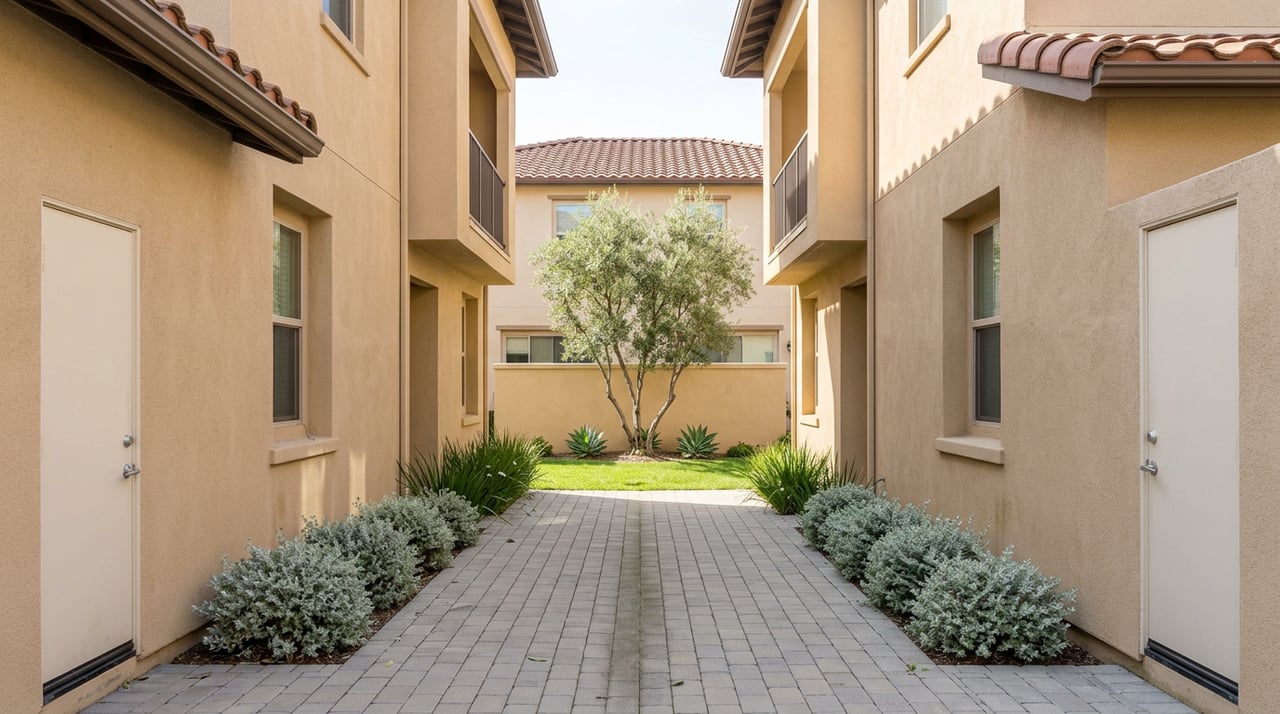
The Fallbrook Community Plan treats the village core differently from the surrounding countryside. In village areas, the County notes that 4.3 units per gross acre is equivalent to quarter-acre lots unless modified through certain planning tools, and it sets a minimum lot size of 6,000 square feet for the single-family matrix.
The plan also allows 5,000 square feet as the smallest permitted lot size in a planned residential development. Outside the village setting, the scale changes quickly.
In Semi-Rural areas, the minimum lot is one-half gross acre. In Rural Lands categories, the minimum lot is one acre. That policy helps explain why Fallbrook can offer both compact in-town homes and larger estate or grove properties within the same community.
Custom Homes Fit The Area
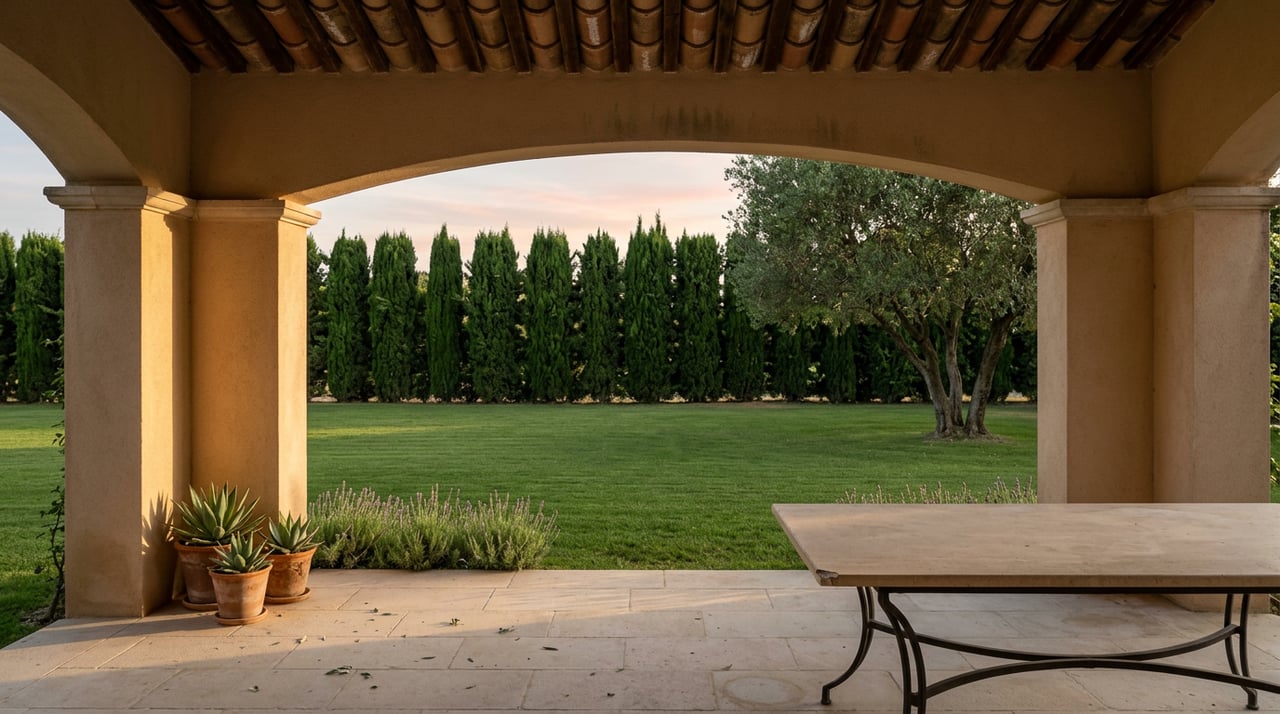
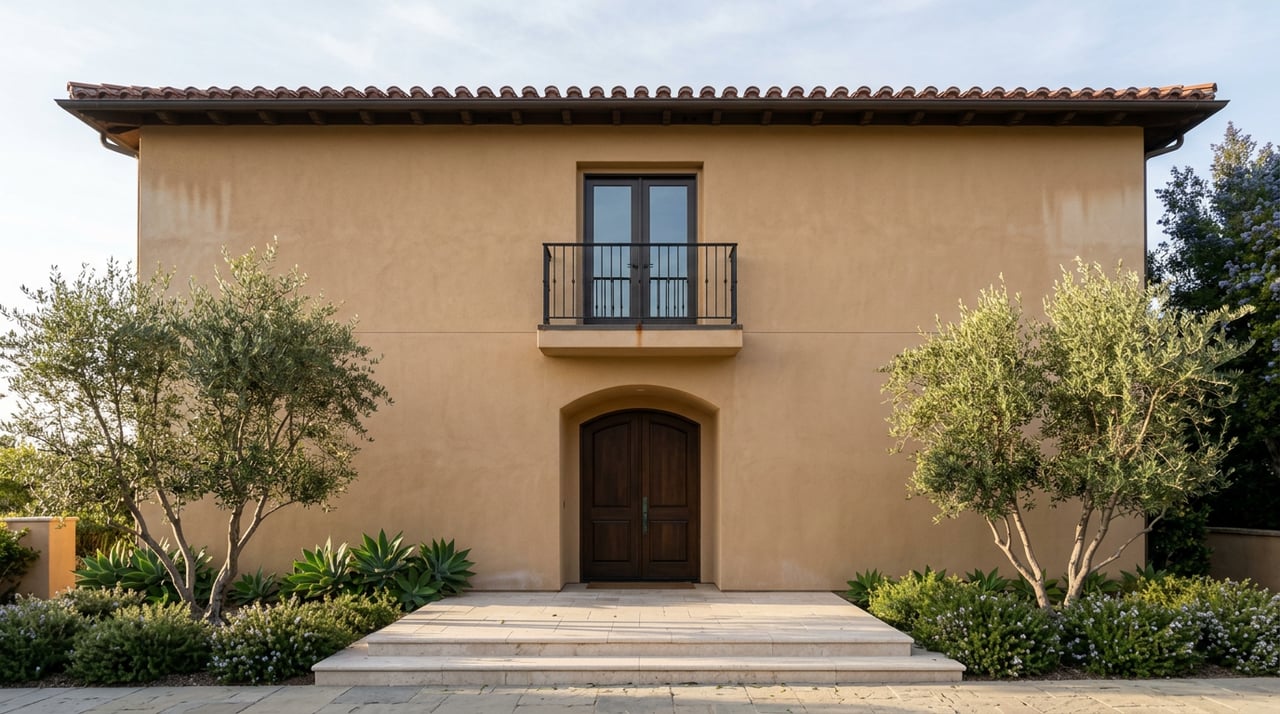
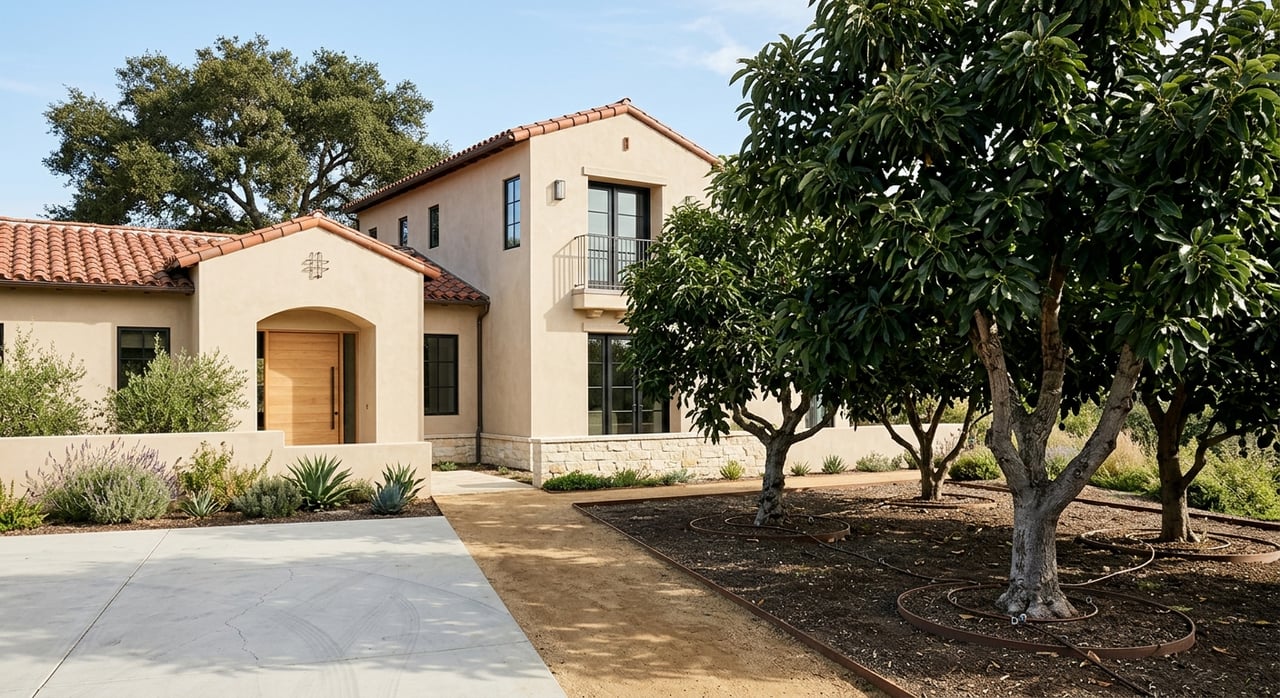
Fallbrook’s planning framework supports country-estate living and light agricultural use, especially groves. The Community Plan also references "Village Style" architecture and identifies compatible styles such as Craftsman, Victorian, Ranch, Colonial, Cottage Mission, and Spanish.
That makes custom homes a natural fit here. In practice, many of Fallbrook’s custom-home opportunities tend to show up on larger lots, in grove settings, or on estate-style parcels rather than in uniform subdivision inventory.
Land Versus Finished Home Pricing
If you are trying to decide between building and buying, local pricing gives useful context. The most recent MLS snapshot for 92028 showed a detached-home median sales price of $942,500 in May 2026, with 49 days on market and 3.8 months of supply.
Land pricing, however, spans a wide range. Recent examples included a 0.6-acre lot at $197,230, a 1.52-acre lot at $220,000, and a 3.35-acre parcel at $650,000.
Finished homes on acreage are priced very differently from raw land. Recent examples included a 3-bedroom, 2.5-bath home on 1.47 acres at $1,198,000, a 4-bedroom home on 1 acre at $1,299,000, and a 5-bedroom home on 2.32 acres at $1,595,000. A recent sold example showed a 3-bedroom, 3-bath home on 4.26 acres closing at $1.25 million in February 2026.
The key takeaway is simple: acreage and finished-home value are not interchangeable. In Fallbrook, your true comparison is often land price plus site work, permits, grading, utility setup, and construction costs versus the speed and certainty of buying an existing home.
Utilities Can Change The Math
One of the biggest differences between parcels in Fallbrook is infrastructure. The Fallbrook Public Utility District, or FPUD, is the first local utility to check because it provides water and sewer service in the area.
FPUD states that it delivers water across roughly 28,000 acres and serves about 35,000 people. But wastewater coverage is much smaller, covering about 4,200 acres downtown and serving about 5,000 metered accounts.
That gap matters. A parcel may look close to town and still have very different utility assumptions than you expect.
Water Service In Fallbrook
For many parcels, public water availability can be a major plus. But availability should never be assumed from location alone.
You will want to confirm whether the parcel has an active connection, whether service is available nearby, and whether any added infrastructure would be needed. If the property has agricultural plumbing, a well, or recycled-water infrastructure, FPUD notes that backflow devices are commonly required on public water connections.
Sewer Or Septic
A large share of lower-density Fallbrook properties rely on septic systems rather than sewer. If the parcel is not on sewer, San Diego County Department of Environmental Health and Quality is the key authority for septic installation or modification.
The County states that septic sizing for private residences depends on percolation test data and the number of bedrooms. That means a parcel’s build potential is not just about its size. Soil conditions and the intended home design matter too.
Fire Exposure Should Be Reviewed Early
In a hilly, vegetation-rich area like Fallbrook, wildfire risk is a core due-diligence issue. CAL FIRE classifies Fire Hazard Severity Zones as Moderate, High, or Very High.
You should verify the parcel’s fire-hazard designation early in the process. That can affect defensible-space requirements and the likely home-hardening measures needed for the property.
This is especially important when you are comparing two similarly priced parcels. A lot with manageable access, lower site complexity, and clearer fire planning may offer a very different ownership experience than a property that looks appealing on paper but carries more site-related risk.
A Smart Due Diligence Checklist
When you are buying land or evaluating a custom-home opportunity in Fallbrook, a careful review upfront can save time and money later. This is where local, process-driven guidance becomes especially valuable.
Start With Land Use
Confirm the parcel’s:
- General Plan designation
- Zoning
- Setbacks
- Lot size rules
- Access
- Easements
- Whether it falls in a village, semi-rural, rural, or specific-plan area
If you are thinking about subdivision, there is another layer to review. San Diego County requires its Conservation Subdivision Program for Semi-Rural 10 and Rural Lands 20, 40, and 80 designations, and that process requires discretionary review.
Review The Site Conditions
Not every lot is a simple build site. The County’s planning guidance emphasizes sensitivity to topography and the need to avoid runoff, drainage, erosion, or siltation problems.
That is why it makes sense to bring in a surveyor and a site-savvy contractor early when the property has slope, unusual access, or uncertain building areas. On more complex parcels, early input can help you understand whether you are buying a homesite or stepping into a larger development project.
Verify Septic And Soils
If the property is not clearly sewered, do not leave septic questions until later. The County makes clear that septic design depends on percolation and bedroom count.
In practical terms, that means you may need guidance from a septic consultant, civil engineer, geotechnical professional, or other qualified designer recognized by the County. This step is especially important when slope, drainage, or soil conditions are uncertain.
Confirm Utility Assumptions
Utility verification can directly affect value. FPUD water service may be available in much of the area, but wastewater service is more limited.
You should also check whether the parcel includes a well, auxiliary water source, irrigation setup, or recycled-water component. On grove or agricultural-style properties, those details can materially shape both use and cost.
How To Decide Between Building And Buying
For many buyers, the best decision framework is not simply, “How many acres do I get?” A better question is, Is this parcel already buildable with manageable utility and fire considerations, or is it really a land-development project?
That distinction often drives the economics in Fallbrook more than the acreage number itself. A lower-priced parcel may look attractive at first, but if it requires complex site prep, septic work, utility extensions, or extensive fire-related improvements, the true cost can rise quickly.
On the other hand, a finished custom home may come at a higher upfront price but offer clearer budgeting, faster move-in timing, and less entitlement risk. If your priority is certainty, that can be a meaningful advantage.
Why Local Guidance Matters In Fallbrook
Fallbrook rewards buyers who look beyond surface-level listing details. Two properties with similar acreage can differ sharply in utility access, usable building area, septic feasibility, and overall project complexity.
That is why this market benefits from experienced guidance, especially when you are evaluating land, custom homes, or estate-style properties. A steady, local process helps you ask the right questions early and avoid expensive surprises later.
Whether you are comparing acreage, exploring a custom build, or weighing a finished home against land, a clear strategy can make the process much smoother. If you want practical guidance on Fallbrook property opportunities, connect with Jamie Gilman for experienced North County insight and a process built around clear communication.
FAQs
What makes Fallbrook different from a typical suburban housing market?
- Fallbrook includes village lots, semi-rural parcels, rural acreage, and custom-home opportunities, so buyers often need to compare land use, utilities, and site conditions alongside home price.
What are common lot sizes in Fallbrook?
- The Fallbrook Community Plan allows smaller lots in village areas, including a 6,000-square-foot minimum in the single-family matrix and 5,000 square feet in some planned residential developments, while Semi-Rural areas require at least one-half gross acre and Rural Lands require one gross acre.
Does every Fallbrook property have sewer service?
- No. FPUD provides water and sewer service, but its wastewater service area is much smaller than its water service area, and many lower-density properties rely on septic systems.
What should you verify before buying land in Fallbrook?
- You should confirm zoning, General Plan designation, lot size rules, setbacks, access, easements, water availability, sewer or septic status, slope, drainage, and fire-hazard designation before making a decision.
Is buying land in Fallbrook cheaper than buying a finished home?
- Not always. Raw land may have a lower entry price, but total cost can rise once you account for permits, site work, grading, utilities, septic, fire-related improvements, and construction.
Why is wildfire review important for Fallbrook properties?
- Fallbrook’s terrain and vegetation make wildfire exposure a key site issue, so buyers should verify Fire Hazard Severity Zone classification and likely defensible-space or home-hardening needs early in the process.