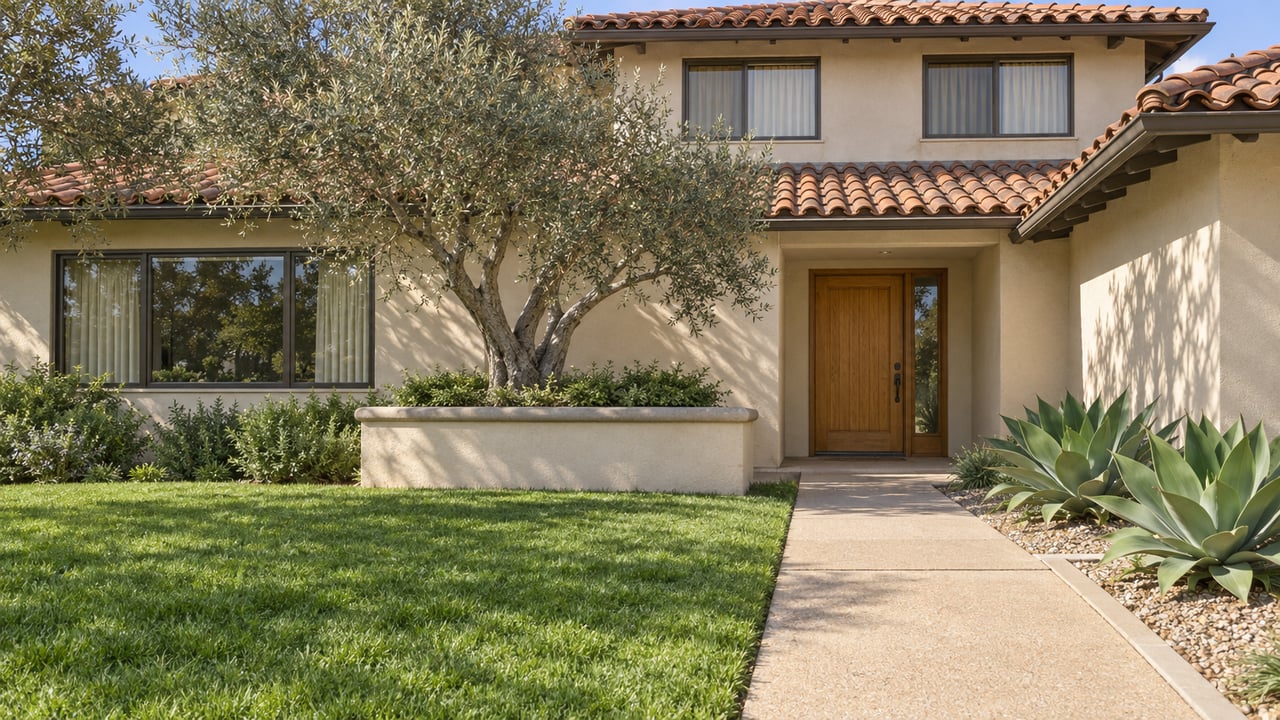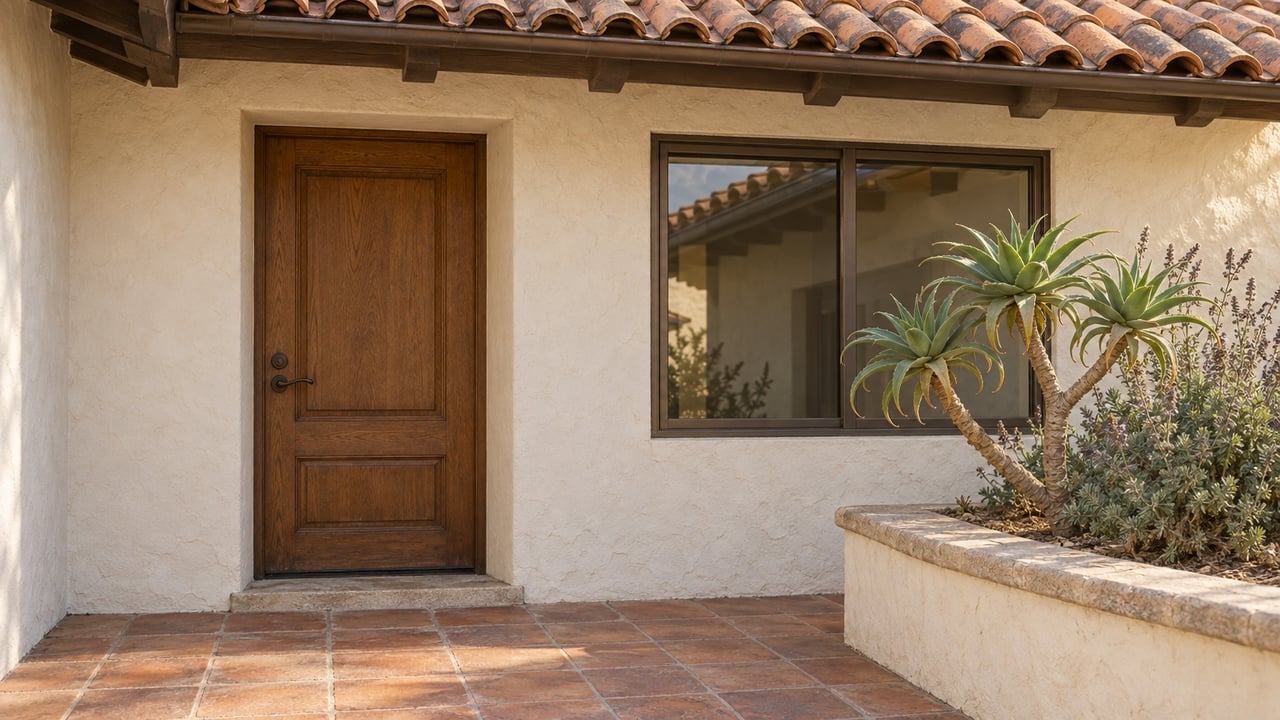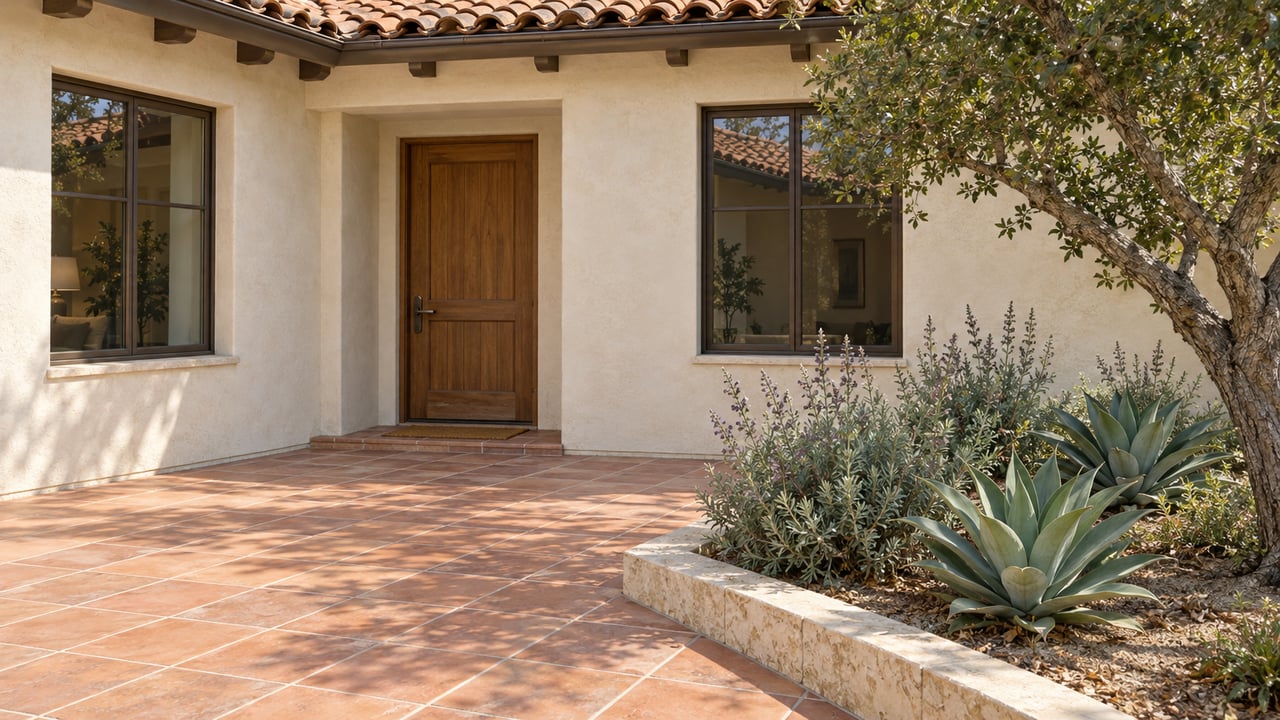
Picture two homes a few miles apart in the Fallbrook area. Both have a standard 3/4-inch residential meter and both use the same amount of water in a month. Why could one owner's fixed monthly water charge run about $20 higher than the other's before either turns on a tap?
The Fallbrook Public Utility District and the Rainbow Municipal Water District both left the San Diego County Water Authority. Both now buy imported water through Eastern Municipal Water District, and both pass along increases from the Metropolitan Water District. They price that water very differently, though, so the agency named on the bill matters. The detachment changed who sells the water wholesale. It didn't stop the upstream price from rising. For anyone weighing a grove property, a large-lot home or a standard house in this part of North County, the costs that differ most are now set parcel by parcel.
The wholesale bill got cheaper once
FPUD left the County Water Authority's service area on January 1, 2024, and joined Eastern's. KPBS reported that FPUD residential customers saw a 5% water rate reduction that January. FPUD's adopted FY 2025-26 budget puts numbers on the change. The district's monthly fixed wholesale charges dropped about 87%, and the cost of treated water deliveries fell about 20%. Those savings let FPUD hold water usage rates flat and cut customers' fixed monthly fees in calendar year 2024.
Rainbow took longer. It finalized its detachment and began buying Eastern's treated water effective November 1, 2024, after paying $3.2 million on October 30, 2024. That payment was the last condition for certification by San Diego LAFCO, the county's Local Agency Formation Commission. Rainbow's detachment FAQ describes a $15.8 million exit fee. Its 2026 budget presentation still lists $15.8 million in water exit-fee debt among the district's obligations. The December 2023 settlement with the County Water Authority required the two districts together to pay $25 million right away, plus related costs and fees. Rainbow's FAQ cites a combined estimate of $7.8 million a year in savings across both districts' customers.
Then the upstream price kept moving
Leaving the County Water Authority removed a middle layer of cost. The source of the water stayed the same. FPUD's December 2025 board packet explains that the district buys from Eastern "at the Metropolitan Water District's (MWD's) rate plus an administrate fee from EMWD." That ties Fallbrook's imported water cost directly to decisions made by Metropolitan's board.
The district's FY 2025-26 budget says so directly.
"However, the District still faces wholesale water rate increases by the Metropolitan Water District (MWD), which are passed through by EMWD."
The same budget says Metropolitan raised rates 11% in 2025 and 9.5% in 2026, which compounds to a 21.5% increase in FPUD's imported water cost over two years. For calendar 2026, the board packet adds that Metropolitan's fixed charges rose about 11.4%. FPUD's committee recommended a smaller increase for customers: 5.0% on water rates and charges, 3.5% on wastewater and 1.0% on recycled water. The board approved those numbers on October 27, 2025, and sent them to the December 8, 2025 meeting for final adoption.
The next round is already set upstream. On April 14, 2026, Metropolitan's board adopted overall rate increases of 6.2% effective January 1, 2027, and another 6.2% effective January 1, 2028. Its published rate schedule also adds three new fixed treatment charges in 2027. Rainbow's May 2026 budget presentation names a 6.2% increase in treated water purchases from Metropolitan in both 2027 and 2028 as a cost driver. The staff recommendation in that presentation calls for raising Rainbow's variable water rates 5% and fixed charges 2.9% on January 1, 2027, then 5% and 3.8% on January 1, 2028. Rainbow's June 2026 newsletter reports that the board approved the two-year budget in May. Those increases are still planned rates until the district completes its formal rate process.
Staying with the County Water Authority wouldn't have avoided these increases either. Its board adopted an 8.3% overall effective increase for 2026. For 2027, it approved a 3% overall effective increase on June 25, 2026, while one component, its melded treatment rate, rises from $530 to $610 per acre-foot, or 15.1%, according to the June 25, 2026 board packet. Those percentages measure different things and can't be compared directly. Both wholesale paths are getting more expensive, and Fallbrook and Bonsall now pay Metropolitan's rate with one less agency in between.
Where the parcel decides more than the district
Once the wholesale price reaches the two local districts, they turn it into very different bills. Rainbow's rate sheet effective July 1, 2026 charges residential customers $6.42 per unit, and it defines a unit as 748 gallons. FPUD's 2026 schedule charges domestic and large-lot domestic customers $6.68 per unit, and its unit is 1,000 gallons. Converted to the same 1,000 gallons by our own math, Rainbow's residential rate comes to about $8.58.
Fixed charges are where the gap grows, and they rise quickly with meter size. The table compares each district's base monthly charge for water service. FPUD's figures include its separate capital improvement charge, which the district lists in its own column.
| Meter size | FPUD service charge + capital improvement charge, 2026 | Rainbow residential fixed charge, from 7/1/2026 | Rainbow agricultural with residence, from 7/1/2026 |
|---|---|---|---|
| 3/4" | $62.12 + $13.99 | $96.76 | $143.81 |
| 1" | $98.65 + $23.30 | $157.20 | $239.68 |
| 2" | $298.10 + $74.57 | $489.56 | $766.97 |
| 6" | $1,824.11 + $466.12 | $3,934.07 | $6,231.63 |
As an illustration, take a home on a 3/4-inch meter using 10,000 gallons in a month. At these posted rates, the FPUD bill comes to about $143: $76.11 in fixed charges and $66.80 for water. The same use on Rainbow's residential schedule comes to about $183: $96.76 in fixed charges and roughly $85.83 for water. Neither figure includes backflow, pumping or sewer charges, and those vary by property.
Several of those extra charges depend on location. Rainbow adds pumping charges for customers at higher elevations where water has to be pumped uphill. That's $3.17 per unit in the Rainbow Heights zone and $1.70 in Huntley, plus a fixed pumping charge of $8.77 a month in all pumping zones. Sewer-connected Rainbow customers pay $100.49 a month per equivalent dwelling unit. On FPUD's sheet, pumping charges of $0.79 per unit apply only in its DSA and Toyon areas.
The rate class on acreage
On grove and acreage properties, the rate class can matter as much as the district. FPUD's agricultural rate for 2026 is $6.12 per 1,000 gallons for all use. FPUD's agricultural-domestic rate charges the first five units each month at $7.95 and everything above that at $6.12. FPUD lists a monthly backflow device charge of $11.10 on a 3/4-inch meter.
Rainbow charges both agricultural classes $5.10 per 748-gallon unit. The table shows how its agriculture-with-residence fixed charges compare with residential ones.
When we look at an acreage parcel with a client, these are the facts that set its water cost:
- Which district serves the meter: FPUD or Rainbow.
- The size of each meter on the property, since fixed charges rise sharply from 3/4-inch to 2-inch and larger.
- How each meter is classified: domestic, large-lot domestic, agricultural or agricultural-domestic at FPUD, or residential, agricultural or agricultural with residence at Rainbow.
- Whether the parcel sits in a Rainbow pumping zone or one of FPUD's pumping areas.
- Whether the home connects to district sewer or uses a private system.
The water rules here are general information, not legal, tax or financial advice. Confirm how any rate class, charge or eligibility rule applies to a specific property directly with FPUD or Rainbow.
What the next two Januaries hold
FPUD's board calendar lists a meeting on Monday, October 26, 2026, at 4 p.m. Last year, the board got its first look at the next year's rates at its late-October meeting and gave final approval in December. The current schedule is on FPUD's water rates page.
- January 1, 2027: Metropolitan's 6.2% overall increase and its new fixed treatment charges take effect. Rainbow plans a 5% variable and 2.9% fixed increase.
- January 1, 2028: Metropolitan's second 6.2% overall increase takes effect. Rainbow plans a 5% variable and 3.8% fixed increase.
Quick answers
Did leaving the County Water Authority lower water bills? For FPUD, yes, at first. Residential rates fell 5% in January 2024, and fixed fees were reduced that year. Metropolitan's increases of 11% in 2025 and 9.5% in 2026 have been passed through since then.
Are Fallbrook and Bonsall rates the same now that both districts buy from Eastern? No. Each district sets its own unit size, fixed charges, pumping charges and rate classes, and Rainbow's 3/4-inch residential fixed charge is higher than FPUD's.
When a Fallbrook or Bonsall parcel's carrying costs include a meter that's larger than a typical home's, the water bill belongs in the purchase math. Jamie Gilman and our team have spent more than four decades helping North County buyers and sellers pin down the costs of acreage and grove properties. If you're weighing one of these properties, or want to know how your own property's setup affects its value, request a free home valuation and we'll go through the details with you.