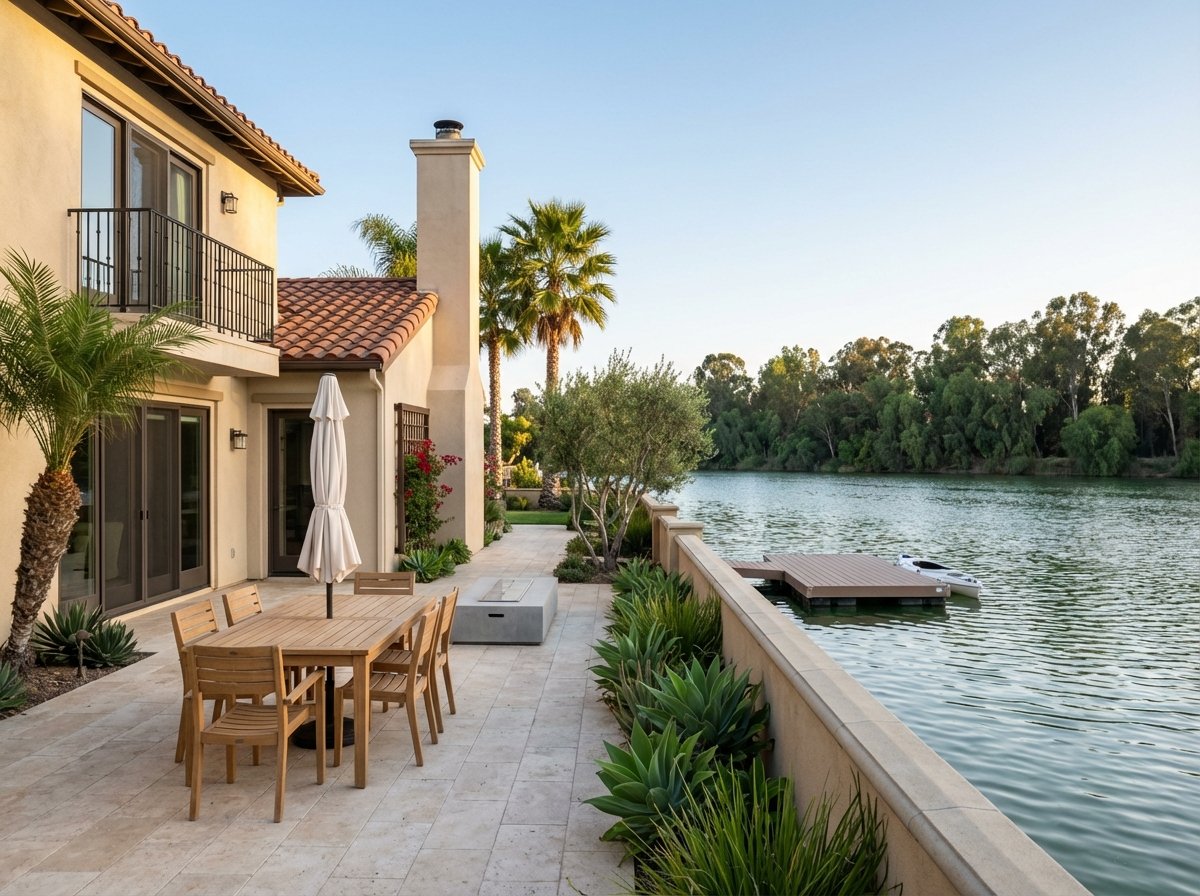
Imagine waking up to glassy water, stepping onto your dock with a coffee, and launching a kayak before breakfast. If that vision pulls you in, Lake San Marcos might be your sweet spot. At the same time, waterfront living here comes with unique rules, layered fees, and details you want to understand before you buy. In this guide, you’ll learn how the community works, what types of homes you’ll find, how memberships and docks are handled, and the practical checks that protect your budget. Let’s dive in.
What makes Lake San Marcos unique
Lake San Marcos is a resort-style, lake-centered community built up from the 1960s and now sits as an unincorporated enclave within the City of San Marcos. The lake itself is about 80 acres, and many daily-life amenities orbit around it. A key difference from many master-planned neighborhoods is how it is organized and operated.
- The Lake San Marcos Community Association (LSMCA) represents broad community interests and shares community resources and reports. You can learn more from the Lake San Marcos Community Association.
- Many recreation facilities, including the lodge, marina, pools, courts, and restaurants, are owned and operated separately by a private operator, historically known as the Lodge or Citizens Development Corporation. LSMCA outlines this relationship on its recreation facilities page.
- Water and wastewater service in the area is typically provided by the Vallecitos Water District, a local public agency. For buyers, that means utilities and some water infrastructure questions run through a special district rather than directly through the city. See Vallecitos updates and projects on the Vallecitos Water District site.
Home types you will find
You will see a mix of housing around the lake, built mainly from the 1960s to the 1990s with infill and upgrades since. Expect:
- Waterfront single-family homes, some with private docks. These are limited in number and often command a premium.
- Lakefront condos and townhomes that put you close to the water at a range of price points.
- Age-restricted 55+ options, notably Chateau Lake San Marcos, which bundles services in higher monthly assessments.
- Gated enclaves, including communities like Varadero.
- Homes along or near the golf course with easy access to recreation.
How pricing compares in context
Market snapshots show Lake San Marcos often lists above some other San Marcos submarkets while remaining competitive with premium coastal areas. For example, recent portal snapshots have cited a roughly 1.0 million dollar median listing price in Lake San Marcos. By comparison, recent Carlsbad median sale figures have been reported near 1.43 million dollars, while San Marcos figures vary by source and method, often in the 830,000 to 933,000 dollar range.
The key takeaway is to compare like with like. Waterfront single-family homes will not track the same as inland condos. A lakefront townhome that includes certain amenities may price differently than a similar-size unit a few streets away. When you evaluate value, line up product type, location, size, and amenity access rather than relying on a city-wide median.
How amenities and memberships work
Amenity access here is not one-size-fits-all. There are typically three layers to understand:
Your neighborhood HOA. Many micro-neighborhoods have their own HOAs with separate CC&Rs, budgets, and rules.
The community association. LSMCA represents broader community interests and publishes helpful resources and lake documents for residents. Explore LSMCA’s site for context on governance and resources.
The recreation operator. The Lodge or CDC historically operates the marina, lake access, pools, courts, and restaurants. In many cases, homes or HOAs pay separate fees for lake and lodge access. Get clarity on whether a home includes a membership, offers an optional membership, or requires a separate lease or assessment. LSMCA’s recreation facilities page outlines the structure.
Dues vs memberships
Your HOA dues may not include lake or dock access. Some HOAs have arrangements that include certain recreation privileges, while others require a separate membership or assessment payable to the operator. Always ask the seller for recent invoices and a written membership summary so you know what your monthly and annual costs will look like.
Dock and boat access basics
Dock rights are not automatic for every shoreline parcel. Private docks are typically leased and managed by the recreation operator, and some communities use shared or leased docks. Boat registration, launch policies, and equipment rules are operator enforced and can change over time. Expect limits on motor size, boat type, and storage.
Before you write an offer, request any recorded dock lease tied to the property, current fee schedules, and written confirmation on whether dock rights transfer at sale. The operator’s policies live outside your HOA documents, so you want both sets of paperwork in hand.
Monthly costs to expect
Effective ownership cost varies based on home type and how much lake access you want. Use this as a planning framework:
- HOA dues. Typical condos and townhomes often show HOA ranges around 200 to 600 dollars per month. Mid-range gated and townhome communities with patrol or lake access often land around 400 to 600 dollars or more per month. Full-service senior buildings like Chateau Lake San Marcos bundle meals, housekeeping, and more, which is why their monthly assessments often run in the multi-thousand-dollar range.
- Lake and lodge assessments. Memberships or lake-use fees paid to the recreation operator are separate in many cases.
- Dock-related costs. Private dock leases, boat registration, launch fees, and storage may carry separate charges.
- Shoreline and dock upkeep. Budget for routine maintenance along the water’s edge.
- Utilities and irrigation. Ask for recent water bills. Service is commonly through the Vallecitos Water District.
- Insurance. Waterfront parcels can have different liability or flood exposures. Check flood zone and get quotes for the exact address.
Water quality, events, and daily life
Lake management is an ongoing responsibility. Lake San Marcos has a documented history of water-quality monitoring and interventions for algal blooms, along with planning and pilot treatments by stakeholders. You can review the latest lake water-quality materials on LSMCA’s lake water-quality page. Environmental work can lead to temporary boating limits or project schedules, so it pays to know what is planned.
Because the lake area includes a hotel and public-facing restaurants and amenities, event activity can bring occasional evening noise or traffic near the core. If that matters to you, review HOA or community meeting minutes and ask neighbors about event frequency, security patrols, and quiet hours.
Insurance and flood checks
Waterfront homes sometimes fall into different insurance categories. Ask your lender and insurance agent to quote coverage for the specific address, including liability for any dock structures. Run a flood-zone check using official flood-map tools and confirm whether the parcel requires flood insurance. Requirements can vary house by house around the lake.
Buyer due diligence checklist
Gather these items before you finalize terms. They will help you understand both costs and day-to-day living:
- HOA documents. CC&Rs, rules and regulations, the most recent budget, reserve study, and meeting minutes. Ask about special assessments within the last five years.
- Recreation membership details. A written summary of Lake and Lodge access, whether it is included, optional, or separately leased, plus the last three years of invoices and any initiation or transfer fees. LSMCA’s recreation facilities page explains the operator model.
- Dock documentation. Any recorded dock lease or assignment tied to the property, current fee schedule, and whether leases transfer at sale.
- Lake water-quality reports. Retrieve the latest reports and any planned mitigation or capital projects from LSMCA’s lake water-quality page.
- Utilities. Confirm providers and rates. For water and wastewater, review the Vallecitos Water District resources and ask the seller for recent bills.
- Flood and insurance. Flood-zone verification for the parcel and written insurance quotes for home and any dock liability.
- Senior or service-bundled buildings. If considering a 55+ or services-included property, request a breakdown of included services, how fees are adjusted, and any community rules.
Lake vs inland golf communities
- Cost structure. Inland golf communities may center costs around club memberships or integrate certain amenities into HOA dues. In Lake San Marcos, you often see HOA dues plus separate recreation operator fees for lake and dock access. Your effective monthly cost depends on what access you want and what your HOA already includes.
- Maintenance exposure. Lakes require water-quality management, including monitoring, treatments, debris control, and long-term planning. Golf communities concentrate costs on turf and course maintenance. Both models carry ongoing expenses, they just show up in different places and are managed by different entities.
- Lifestyle feel. Lake living revolves around paddling, boating, fishing, and waterfront gatherings. Golf communities emphasize course access and club-centered social calendars. Choose the rhythm that best matches how you want to spend weekends.
How we can help
Waterfront purchases reward careful due diligence. Our team knows the documents to request and the questions to ask so you can buy with confidence. If you want a clear path to the best-fit home on or near the lake, reach out to Jamie Gilman for a local, no-pressure consultation.
FAQs
What is Lake San Marcos and how is it organized?
- It is a resort-style, lake-centered community with a community association (LSMCA) and a separate recreation operator that runs the marina, pools, and courts; learn more at LSMCA’s site.
Do all waterfront homes include a private dock?
- No, dock access is not automatic for every shoreline parcel; many docks are leased through the recreation operator, so request the dock-lease documents and transfer rules before you offer.
How do HOA dues and lake memberships typically work?
- Your neighborhood HOA collects dues for common areas, while lake and lodge access is often a separate membership or assessment handled by the recreation operator; always verify what is included.
What are typical monthly costs around the lake?
- Condos and townhomes often range around 200 to 600 dollars per month for HOA dues, many gated communities land near 400 to 600 dollars or more, and full-service senior buildings run in the multi-thousand-dollar range due to bundled services.
Can I use a motorized boat on Lake San Marcos?
- Operator-enforced rules cover boat types, motor size, and registration; policies can change, so confirm current rules and fees with the recreation operator and get them in writing.
How is lake water quality managed and where can I check it?
- The lake has ongoing monitoring and management, including interventions for algal blooms; review the latest updates and reports on LSMCA’s lake water-quality page.